
Templar header

Tuesday, May 30, 2017

Saturday, March 18, 2017
Ambrose von Sievers, Archbishop of Gothia
+ Ambrose von Sievers, of the Metropolitanate of Gothia is a Bishop of the True Orthodox Church (Russian Catacomb Church). It is the successive church that has escaped the persecutions of the Bolsheviks and their successive agents. His church is considered in some circles as non-canonical because of it's refusal to submit to the KGB installed church. As the escaped Andrewite Bishop did canonically consecrate +Ambrose, it is believed therefore the church of the Goths is truly canonical unlike many other jurisdictions. However, the persecutions have continued, as the Clergy have been attacked and killed over the last two generations.

The Apostolic Succession of Archbishop Ambrose von Sievers (two main lines)

The Apostolic Succession of Archbishop Ambrose von Sievers (two main lines)
Russian Orthodox Line
Russian Orthodox line
Jesus Christ + Andrew, the Apostle of our Lord. Founded 38 Stachys, the Disciple, one of the 70 Apostles. 38 - 54 Onesimos 54 - 68 Polykarpos 69 - 89 Ploutarchos 89 - 105 Sedekion 105 - 114 Diogenes 114 - 129 Eleftherios 129 - 136 Felix 136 - 141 Polykarpos II 141 - 144 Athenodoros 144 - 148 Euzoios 148 - 154 Laurentios 154 - 166 Alypios 166 - 169 Pertinax 169 - 187 Olympianos 187 - 198 Markos I 198 - 211 Philadelphos 211 - 214 Kyriakos I 214 - 230 Kastinos 230 - 237 Eugenios I 237 - 242 Titos 242 - 272 Dometios 272 - 303 Roufinos 303 Provos 303 - 315 Metrophanes I 315 - 325 Alexandros 325 - 340 Paulos I, the Confessor 340 - 41, 342 - 34, 348 - 50 Eusebios 341 - 342 Makedonios I 344 - 348, 350 - 360 Eudoxios 360 - 369 Demophilos 369 - 379 Evagrios 379 Maximos I 380 Gregory, the Theologian 379 - 381 Nectarios 381 - 397 John I, the Chrysostom 398 - 404 Arsakios 404 - 405 Attikos 406 - 425 Sisinios I 425 – 427
Nestorios 428 - 431
Maximianos 431 - 434 Proklos 434 - 447 Flavianos 447 - 449 Anatolios 449 - 458 Gennadios I 458 - 471 Akakios 471 - 489 Favritas (Fravitas) 489 - 490 Euphemios 490 - 496 Makedonios II 496 - 511 Timotheos I 511 - 518 John II, the Cappadocian 518 - 520 Epiphanios 520 - 536 Anthimos 535 - 536 Menas 536 - 552 Eutychios I 552 - 565, 577 - 582 John III 566 - 577 Eutychios II 577 - 582 John IV, the Faster 582 - 595 Kyriakos II 595 - 607 Thomas I 607 - 610 Sergios I 610 - 638 Pyrros I (later returned as Pyrros II) 638 - 641 Paulos II 641 - 652 Pyrros II [same as Pyrros I] 652 or 654 Petros 652 - 664 Thomas II 665 - 668 John V 668 - 674 Constantine I 674 - 676 Theodoros I 676 - 678, 683 - 686 Georgios I 678 - 683 Paulos III 686 - 693 Kallinikos I 693 - 705 Kyros 705 - 711 John VI 711 - 715 Germanos I, the Confessor 715 - 730 Anastasios 730 - 751 Constantine II 754 - 766 Niketas, the Slav 766 - 780 Paulos IV 780 - 784 Tarasios 784 - 806 Nikephoros I 806 - 815 Theodotos, Melissenos 815 - 821 Antonios I, Kasymatas 821 - 826 John VII the Grammatikos 826 - 842 Methodios I, the Confessor 842 - 846 Ignatios I, the Prince 846 - 857, 867 - 878 Photios I 857 - 867, 878 - 886 Stephanos I, the Prince 886 - 893 Antonios II, Kavleas 893 - 895 Nikolaos I, the Mystic 895 - 906, 911 - 925 Euthymios I 906 - 911 Stephanos II 925 - 928 Tryphon 928 - 931 Theophylctos, Lakapenos, the Princeling 933 - 956 Polyeuctos 956 - 970 Vasilios I, Skamandrenos 970 - 974 Antonios III, Skandalios, also Stoudites 974 - 980 Nikolaos II, Chrysoverges 984 – 995
Leo Michael, the Syrian 991-1004
Leontius 1004-1015
John I 1015-1037
Theopemptus 1037-1051
Hilarion 1051- ?
George 1072-1080
John II 1080-1096
John III 1096-1098
Ephraim 1096-1098
Nicolas 1098-1108
Nicephorus I 1108-1124
Nicetas 1124-1127
Micahel II 1127-1147
Clement 1147-1154
Constantine 1154-1160
Theodore 1160-1164
John IV 1164-1167
Constantine II 1167-1185
Nicephorus II 1185-1201
Matthew 1201-1205
Cyril I 1205-1237
Joseph 1237-?
Cyril II 1240-1281
Metropolitans of Vladimir and of All Russia Maximus 1283-1305
Peter 1305-1328
As Archbishops of Moscow and of All Russia
Theognostes 1328-1352
Alexis 1254-1378
Cyprian 1381-1407
Photius 1408-1431
Isodore 1436-1441
Jonah 1448-1461
Theodosius 1462-1467
Phillip I 1467-1472
Gerontius 1472-1491
Zosimus 1491-1496
Simon 1495-1510
Barlaam 1511-1521
Daniel 1522-1539
Joasaph 1539-1542
Macarius 1542-1563
Germanus 1564-1565
Phillip 1565-1568
Cyril II I 1568-1572
Anthony 1572-1581
Dionysius 1582-1587
Patriarchs of Moscow and of All Russia
Job 1589-1605
Hemongenes 1606-1612
Philaret 1619-1633
Joasaph I 1633-1641
Joseph 1642-1653
Nicon 1653-1667
Joasaph II 1667-1672
Pitrim 1672-1673
Joachim 1674-1690
Adrain 1690-1700
Stephan 1700-1721
Joseph 1742-1745
Plato 1745-1754
Hilarion of Krutitsy, Coadjutor 1754-1757
Timothy 1757-1767
Ambrosius 1768-1771
Samouel of Krutitsy, Coadjutor 1771-1775
Plato II 1775-1811
Augustin 1811-1819
Serafim 1819-1821
Filaret 1821-1867(who on December 15, 1840 consecrated his successor)
St. Innocent 1868-1879
Palladius Rayev (See Above)
Macarius I 1879-1882
Joannicis 1882-1891
Leontii Lebedinskii 1891-1893
|
Ruling hierarchs of the Diocese of Kazan
As Archbishops of Kazan
Archbishop Lavrenty I 1568 to 1574 Reposed in office
Archbishop Vassian 1575 Reposed in office
As Metropolitan of Kazan and Astrakhan
Metropolitan St. Hermogen 1589 to 1606 to Patriarch of All Russia
As Metropolitans of Kazan and Sviyazhsk
Metropolitan Lavrenty II 1657 to 1672 Reposed in office
As Metropolitan of Kazan and Bulgaria
Metropolitan Ioasaph 1674 to 1686 Reposed in office
As Metropolitan of Kazan
Bishop Gavrill II (Kremenetsky) 1755 to 1762 transferred to Kiev as Metropolitan
Archbishop Amvrosy I (Podobedov) 1785 to 1799
As Archbishops of Kazan and Simbirsk
Archbishop Serapion (Alexandrovsky) 1799 to 1803
Archbishop Pavel (Zernov) 1803 to 1815
Archbishop Amvrosy II (Protasov) 1816 to 1826
Archbishop Jonah (Pavinsky) 1826 to 1828
Archbishop Philaret (Amphitheaters) 1828 to 1836
As Archbishops of Kazan and Sviyazhsk
Archbishop Vladimir I (Uzhinsky) 1836 to 1848
Metropolitan Gregory (Postnikov) 1848 to 1856
Archbishop Athanasy (Sokolov) 1856 to 1866
Archbishop Anthony II (Amphitheaters) 1866 to 1879
Archbishop Sergei (Lyapidevsky) 1880 to 1882
Archbishop Pallady (Raev-Pisarev) 1882 to 1887
Archbishop Vladimir II (Petrov) 1892 to 1897
Archbishop Arseny 1897 to 1903
Archbishop Dimitri I 1903 to 1905
|
6. In 1897 LEBEDINSKII, Leontii (together with Archbishop Dimitri Sambikin of Kazan) consecrated
KHRAPOVSHY(Khrapovitsky), Antonii. http://glory2godonline.com/docs/apostolic_succession/apostolic_succession.pdf (In 1900 Antony was made bishop of Ufa, and in 1902 bishop of Volhynia and Zhitomir. Later was President of the Russian Church Abroad) https://en.wikipedia.org/wiki/Antony_(Khrapovitsky)
5. In 1905 Khrapovisky, Antonii consecrated
Archbishop Dimitri II (Sambikin), he was Archbishop of Kazan and Sviyazhsk from 1905 to 1908
4. On October 4, 1907, Chief heirarch Dimitri II (Sambikin) consecrated
Hieromartyr Andrew October 4, 1907) he was “consecrated bishop of Mamadysh, the third vicariate of the Kazan diocese”.
3. 1923 St.Andrew and Nicolas Ipatoff in Ufa consecrated
Abbakum (Borovkoff)
2. In 1928 St. Andrew of Ufa with Job (Grechisvkin) consecrated
Amphilochius (Shibanov) as Bishop of Tyumen Diocese. In the period of persecutions, around 1940 he secretly transferred to Transbaikal region and took Tchita cathedra.

His co-consecrator Job (Grechisvkin) was consecrated in 28th of November 1922 by Andrewites' Bishops Mark Bogolunov and Trophim Yakobchu. he was re-consecrated in 1927 by Andrew and Abbakum in Ufa. Job Grechisvkin is a very important person in the Catacombs. He was martyred in 1940.

1. In 1994 Amphilochius (Shibanov)
Ambrose von Sievers 1994
Background
1927 AD — Metropolitan Sergius Stragorodsky, a leading Russian bishop, declares the Church to be completely loyal and subject to the antichristian Soviet government. Several bishops throughout Russia protest against this declaration, and are forced underground, thereby forming the Catacomb Church of Russia. The Russian Church Abroad also protests. Sergius' followers later form the "Moscow Patriarchate," created by Stalin in 1943.
1928 AD — Council of Syzran-Yeltz-Vyshny-Volochok in Russia (Nomadic Synod), convened and presided over by Bishop Mark Novoselov, and attended at first by 3 other bishops and 3 priests, each representing a different Catacomb Synod (i.e. Danilovites, Josephites, Andrewites, Victorites, Yaroslavlites, Yedinovertsy, etc). This council condemns the renovationists as well as the sergianists as schismatics, declares them bereft of sacramental grace, and requires their chrismation upon reception into the Church.
+ Ambrose stands in a strict Israelite position! Amphilochius had his Gens' Legend that they have Benjamin origine.
The Gothian Church who represents +Ambrose has two local Bishops: David of Hersones and Dori Hilar of Tamantarchont & Redae.
The Catacomb Church of True Orthodox Christians has 4 Bishops from 1 Gens of Amossoff. It's old Novgorodian Noble Gens. They have Gens Legend of origine from Haggi of Gad's Tribe.
Wednesday, February 15, 2017
Gothian Imperial Knights Templar (GIKT) Teaser Trailer for our upcoming introduction video (more at www.GothianTemplar.org)

More coming soon at: http://www.GothianTemplar.org
Subscribe to our Facebook Group:
https://www.facebook.com/groups/337184059802470
Find our Facebook Page at:
https://www.facebook.com/imperialgothicknights/
Monday, January 2, 2017

Friday, October 21, 2016
Jerusalem Sovereignty Proposal part 1
This article gets into several aspects of the Jerusalem Sovereign state (Crusader state) as well as Knights of allegiance to valid sovereign jurisdictions as sources of their fons honorum (Knighthood).

+ Sovereign Royals of Gothia and Anjou Formed the First Templar Order
+ Our Order has Western Orthodox Culdee Ecclesiastical
+ Our Order has East Orthodox Russian Ecclesiastical protection (Catacomb church protections of the Metropolitantate of Gothia/Crimea)
+ Our Grand Master +Stephen is de jure Monarch and head the original founding First House of Anjou(legitimist branch) of the only rightful line of 11 successive Kings of Jerusalem founded the Templar together with the East Orthodox Patriarchates. The first two Grand Masters of the Templar were also house of Anjou, who led the Templar before the Western papacy decided to endorse the order.
+ Our Order has Successor Knights of the original local Grand Commanderies in England, in Germany (Saxony/Brunswick), Czech and Poland.
+ Our Order maintains a Jerusalem Presence (Priory of Salem, at a Gibeon farmland)
The Militia Nature Of the Templar
The missions of the Templars weren't only engaged in the Holy Land, they also worked to keep the peace at home.
500 Knights Templar defended Poland against the first mongol invasion.
500 Knights Templar defended Poland against the first mongol invasion.
.
The "Otun milite Templi" signed the treaty of Westminster in 1153 that made the peace between Henry II and King Stephen. Militia of the Templars were just starting in England around that time. Later the Warwick area under their landlords / Templar commanderies had begun flourishing. These often had allegiances also at Jerusalem which could have conflicted with the allegiances back home. However they still were Templars. This is how the order works still today, under their national Nobility or Lords. However, under the Priory of Salem, we are working towards a unification of the national commanderies under one Elected Grand Master at Jerusalem (our Salem Grand Priory) We must get this definition right. There must always be to one with true sovereignty that you swear fealty to.
Historically any militant that protected the lands of their lord (from whichever organization locally) were called Chivralic or Knights. Landlords could divide their lands under a "Knights Fee" structure. These were all somewhere down under a King where the fons honorum is rooted in actual sovereign territory (valid in international law at least de jure, if not also de facto). All who lived under their Knights Fee paid fealty to their Lord who in turn was under the ultimate sovereign of the land. The Knightly houses would train their successors from a young age in the primary skills of a warrior.
This process is called SUBINFEUDICATION
This is demonstrated by Lord Henry le Notte (House of Nott) who is recorded as holding the "Knights fee" land of Preston Bagot in the year 1235. This was the Balshall Commandery, and was the Grand Commandery for all of the Warwick region Templars.
Eventually 6 Templars were arrested there at Ballsall and this "Knights fee" was later transferred to the Knights Hospitallers. This specific Knight's Fee was was stolen, and yet the house of Nott has maintained the cause ever since that this Templar land was wrongfully stolen. Several chroniclers and Nobility experts have shown that this Temple Balsall was part of the earlier Earldom held by the House, and the Knights were directly under those who bore the distinction of Earls. These lands of Kineton were written in a Charter of King Edgar, as the family's "eternal inheritance".
These Templars who were living on the land lived there in the process of Subinfeudication to His, as the Templars did wherever they were. The local Abbot's name was William the Templar of Reading Abbey, who later became an Archbishop. These were the practices and laws.
CHIVALRY in Websters 1828 Dictionary:
In English law, a tenure of lands by knights service; that is, by the condition of performing service on horseback, or of performing some noble or military service to his lord. This was general or special; general, when the tenant held per servitium militare, without specification of the particular service; special, when the particular service was designated. When the tenant held only of the king, the tenure was regal; when he held of a common person, it was called common. This service was also grand sergeantry, as when the tenant was bound to perform service to the king in his own person; and petit sergeantry, when he was bound to yield to the king annually some small thing, as a sword or dagger. chivalry that might be held of a common person, was called escuage, scutagium, or shield service. Websters Dictionary 1828 - "Chivalry"
So we can see also commoners can be Chivralics (or militia) of the Templars. (Once initiated into the ways of the order of course.) These provided service to their land lords to keep the peace in any area they operated. If they had an allegiance back home that conflicted with the Jerusalem commanders, these would be up to the commanders to settle.
Such a conflict took place in the earliest times of the Templars in England with the "Otun milite Templi", and several other supports to keep order within the realm. Other times have been documented like the time of King John, the aftermath of the signing of the Magna Carta, etc.
Militia of the Templars in local matters is known not only in England but throughout Christendom, helping assist locals in times of need. Till the 1300's there were very good relationships of the Templar and the people. The example shown of the Knights Fee of Preston Bagot "fee-in tail" to the House of Nott, was just one of many flourishing commanderies (now called a Preceptory) by the locals. These often had allegiancies at Jerusalem which could have conflicted with the allegiances back home. However they still were Templars. These principles of Chivalry exist within the Templars today.
There is a lot of mis-information on the facts of the Templar structures. Some are stuck in the false belief that Monks couldn't own any lands. However, that has long been established Monks could both marry and own lands. As the Culdee were the primary Chaplains for the Templar, they serve as a good example of such structure Glastonbury/Culdean Married Abbots and Monks.
However it is true that some local units of monks would add extra vows upon themselves for more protections in battle. There has always been an autonomy for each commandery and each monestary to place on vows unique to their jurisdiction.
So we can see also commoners can be Chivralics (or militia) of the Templars. (Once initiated into the ways of the order of course.) These provided service to their land lords to keep the peace in any area they operated. If they had an allegiance back home that conflicted with the Jerusalem commanders, these would be up to the commanders to settle.
Such a conflict took place in the earliest times of the Templars in England with the "Otun milite Templi", and several other supports to keep order within the realm. Other times have been documented like the time of King John, the aftermath of the signing of the Magna Carta, etc.
Militia of the Templars in local matters is known not only in England but throughout Christendom, helping assist locals in times of need. Till the 1300's there were very good relationships of the Templar and the people. The example shown of the Knights Fee of Preston Bagot "fee-in tail" to the House of Nott, was just one of many flourishing commanderies (now called a Preceptory) by the locals. These often had allegiancies at Jerusalem which could have conflicted with the allegiances back home. However they still were Templars. These principles of Chivalry exist within the Templars today.
There is a lot of mis-information on the facts of the Templar structures. Some are stuck in the false belief that Monks couldn't own any lands. However, that has long been established Monks could both marry and own lands. As the Culdee were the primary Chaplains for the Templar, they serve as a good example of such structure Glastonbury/Culdean Married Abbots and Monks.
However it is true that some local units of monks would add extra vows upon themselves for more protections in battle. There has always been an autonomy for each commandery and each monestary to place on vows unique to their jurisdiction.
Templar would pray in any rite of the local Christian jurisdiction that they were at, so long as they were canonically valid. Some days be praying in a Latin Diocese and another day in various Eastern Orthodox. The place they prayed wasn't part of their vows, and they were free to associate more-so with Eastern (as does much of the Benedictine Monks, as a pre-schism Orthodox order).
Kings (and Queens) of Jerusalem
Sovereign protection of the Templar Order has been consistently maintained by rightful Monarchs whether of Jerusalem, Scotland, England, Germany, etc. For a priory or other institution of the Templar to be under sovereign protections of the local state they represent those sovereignties bearing the local name such as they did at Oltun Warwickshire "Oltun militie templi" etc. Sovereign territory or even non-territorial sovereignty or governments-in-exile may include (if legitimate in international law) the protecting of Royal and Ecclesiastical titles (ie King of Jerusalem, Princes, Barons, Bishops, Archbishops or Ranks of the Templars), or could be protecting Christians who are seeking citizenship in the restored Kingdom of Jerusalem. The Templars protect and support many lines of Nobility that maintain Jerusalem titles as their inheritance.Kings (and Queens) of Jerusalem
There have never been just one named King and/or Princes, Queens and Princesses of Jerusalem at any given time since the Crusades. There have always been numerous striving for restoration of the Kingdom. However the House of Brunswick and House of Spain have some of the strongest claims.
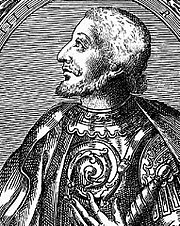 |
| Charles II of Naples, King of Jerusalem, forefather of Isabella and Ferdinand |
The most vocal and widely recognized Royal Houses who posses legal claim to the Sovereignty of the Kingdom of Jerusalem today is the Gotha Saxon-German related families which include the Royal House of England, and chiefly the House of Wolfenbuttel-Brunswick which upkept much of the maintenance of the legitimist Templar.
There's also the House of Sapin ( Idalgos - Adel Gothas) and Portugal. They have maintained the titles of Kings and Queens of Jerusalem as their family inheritance. The Visigothic lines gained more wider acceptance during the times of Ferdinand and Isabella.
This goes back to their Visigothic (Spanish and Gothian) lines, of which also the House of Brunswick / Gulephs has maintained a share of these rights within the Knights Templar. From ancient times the Guelphs/Welfs (House of Brunswick) were protectors of Naples, Genoa, Ferarra, Verona, and other Italian states where their Kings became the Kings of Jerusalem. As descendant of Henry I there's also the Angevin blood which sat 11 Kings of Jerusalem. Brunswick dukes also held the title of prince of Gottingen (among other Goths states), while also being in line of succession for the throne of Jerusalem.
This goes back to their Visigothic (Spanish and Gothian) lines, of which also the House of Brunswick / Gulephs has maintained a share of these rights within the Knights Templar. From ancient times the Guelphs/Welfs (House of Brunswick) were protectors of Naples, Genoa, Ferarra, Verona, and other Italian states where their Kings became the Kings of Jerusalem. As descendant of Henry I there's also the Angevin blood which sat 11 Kings of Jerusalem. Brunswick dukes also held the title of prince of Gottingen (among other Goths states), while also being in line of succession for the throne of Jerusalem.
See our article, Successor of several Imperial and Royal Houses of Gothia, and Representative Heir of these states (several of them are now dormant)
The article gets into succession of the houses of the Visigothic Nobility(Toulouse Gothia), the Ostrogothic Nobility (Amelung/Billung) of the Dukes of Saxony, the early Emperors. Furthermore, the "Principality of Gottingen" is the alloidial capital of the House of Brunswick. As alloid capital, the rightful duke of Wolfenbuttel-Brunswick, Charles II made a pact with Napoleon III to seize this land from Hanover. The French did not follow through on their pledge (yet) but it remains a title of the house of Wolfenbuttel "Prince of Gottingen" as a central, formerly a capital alloid.
Numerous Royal Houses also maintain the titles of Jerusalem within their inheritance. Examples abound.
Brunswick is one of those houses, via the house of Anjou. The House of Brunswick is living Nobility, and are direct successors of the original founders of the Templar (of Anjou), the two who were Grandmasters BEFORE the pope endorsed the Templar. Our family, and those aligned with us use both our family's Anjou coat of arms and Templar coat of arms.
Henry the Lion (of Brunswick) became a major player in the Crusades and the Templar.
The eldest son of Henry the Lion and Matilda was presumptive heir of Anjou (and King of England).
He was heir of Anjou. The first and second Grandmasters of the Templar were of this Angevin Dynasty (Anjou) who formed this order well before the Pope endorsed it. For generations this valid House of Anjou led the Templar in cooperation with the Patriarch of Constantinople and of Jerusalem.
Otto IV of Brunswick, the actual heir of the Angevin Empire.
Although Henry the Lion did not become the chief Monarch of the Angevin Empire, his son Otto IV arguably did.
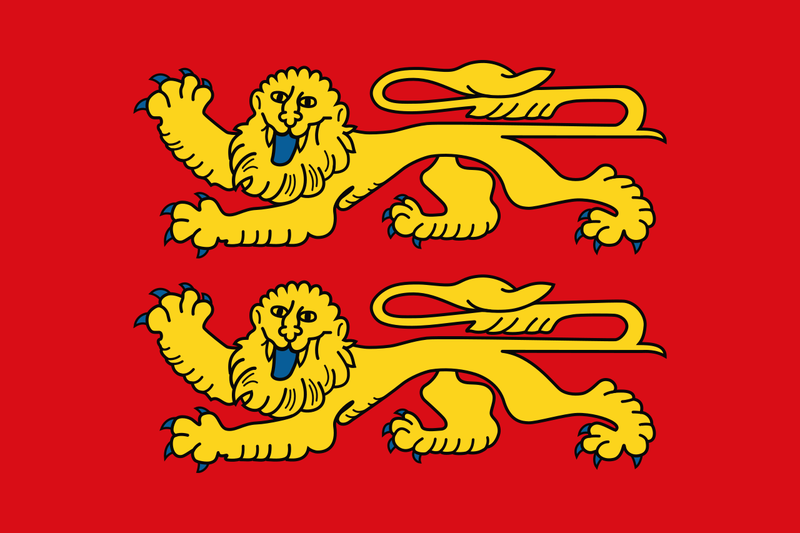
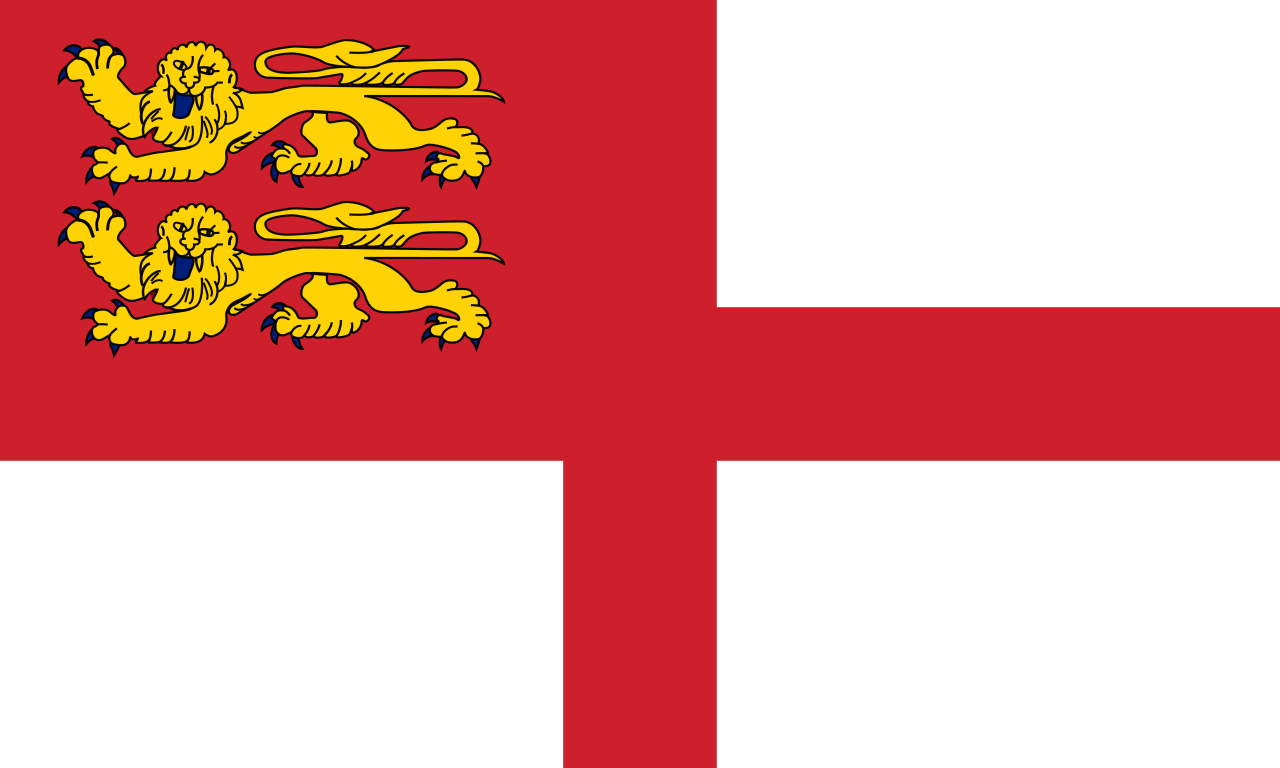
Henry the Lion was very much active in Templar affairs, in the early states as his heirs were to become heads of the Angevin Empire (spanning England, France and Jerusalem). He founded numerous Templar Commanderies in Brunswick Germany. Henry the Lion's third son via Matilda of Anjou was Otto IV, and he became Holy Roman Emperor although designated to be Angevin Emperor by inheritance law, and by official decree of the lawful reigning Uncle King Richard.
As Henry the Lion's, sons Henry V and Otto IV had the most validly legal claim as the Angevin successor, it makes the house of Brunswick a worthy topic of interest for any who call themselves Templar. The Founder House of the Templar, and first two Grand Masters, supporter princes, and Kings of Jerusalem either of the Gothia Principality of France (which today is titled as Marqis under the Aquitaine Brunswick flag) or at least of the Angevin Royal House of Britain, Normandy/Aquitaine and especially the longest running line of Jerusalem Kings. Consequentially this line also bears a family tree back to Israel, Judah, and to the line of King David of Jerusalem.
The Queen of England today also carries the title of Jerusalem.
The whole world witnessed when on syndicated TV when the present Queen of England was coronated with the pronouncement by the Archbishop, declaring her to be "Queen of Israel".
For three centuries these titles of Jerusalem were proclaimed at England over the House of Brunswick during the reign of Hanover.
However, most do not know that in the House law of Este-Guelph Brunswick, Hanover is the Junior branch, and Brunswick-Wolfenbuettel is senior. It doesn't matter that Hanover was made an electorate within the Empire as our house has always been arch-rivals of the Habsburgs for the Imperial crown. Still all parties of the house recognize that Wolfenbuettel is senior. Still the original compacts and laws hold precedence at the founding of the house. For 300 years this Junior line of Brunswick, known as the Hannoverian Kings of England, had this title "King of Israel" pronounced over them by the Archbishops.
Still within the house law the senior branch Brunswick-Wolfenbuettel-Oels must be restored. This title "King of Jerusalem" has not only been part of the Angevin house of Brunswick since ancient times, it has remained operating to this present day.
During the French wars against the Royalist Templars Napoleon killed half a dozen Dukes of Brunswick, including the Grand Master of the French Templars, Louis Hercule Timoléon de Cossé-Brissac. He had become Grand Master in 1776, and was killed during the French Revolution in the cause of the Royalty.
In the aftermath of these wars, Hanover was bribed to press fraudulent claims over the senior House Brunswick younger surviving Heirs. Most of the allies of the senior line of Brunswick did not buy these claims of Hanover that they could cause Brunswick to be disinherited by the senior branch. The German federal government did not agree with seizure of Brunswick lands, and stipulated that although the lands are stolen, the heirs of the senior line should inherit (copies are in our possession). The Swiss and French courts still did maintain inheritance as belonging to the senior line Brunswick Heirs. Demands from the Emperor of Austria to restore the senior branch, and not to have Hanover invading or intermeddling with their neighbor senior branch. (These are also in our posession.) The Emperor of Austria cataloged several matters of established international law in regards to the succession of the state and intermeddling of Hanover. They conclusively proved the matters of dethroning the younger children of the last duke were in violation of the law by interfering with the continued inheritance to the senior line of Brunswick-Wolfenbuettel.
This has been republished in France, in books that demonstrate this all was illegal. Since the Brunswick youngsters were unlawfully and forcibly removed, history has been systematically attempted to be re-written as it concerns the Kingdom of Jerusalem and the Templars.
According to House law, with the failure of all these to act according to the law, there must arise a cadet branch to restore it. Prince Charles II's firstborn son Charles who immigrated to the United States is the correct progeny, not of a cadet branch, but is correctly called a senior Branch. All parties except for Hanover had initially accepted that the agnates of Chalres II would succeed to the throne, whether or not he was exiled in Geneva. This all being realized in the House of Nott-Brunswick(d'Este-Guelph), read about the
Nevertheless, at Jerusalem there has remained a plea by the Clergy to restore the Crusader Kingdom of Jerusalem. There have consistently been Roman, Egyptian Coptic, Byzantine, Greek, Anglican and other church Bishops and Archbishops stationed at Jerusalem for the restoration of the prophesied Kingdom. This is additional proof of the continual protest and maintenance of the Christian Kingdom of Israel as maintained in the majority by those who are successors of the founders of our religion. The Bishops and other high Clerics all have had autonomous princely authority like the Pope of Rome.
Non-Roman Bishops (and many independent Abbots, ie Glastonbury) worldwide have had equal sovereignty as the Pope of Rome. It wasn't only the Eastern Church who has popes that are paid equal respects. The Western church (ie Columbanus the Culdee) has always had ours, though more suppressed. Rome kept some preeminence claimed in the West. However, it wasn't with such power really until Mussolini granted the Papacy with a bit more sovereignty. That is the current sovereignty they actually enjoy today as a state. However, before then, sovereignty of ecclesiastical institutions were still respected, and will continue to be in future times. Numerous charters of the Pope and numerous Monarchs confirmed such sovereignties are belonging to the Abbots and Clerics of Glastonbury.
The Jerusalem jurisdictions are distinct entities and lands that belonged to our forefathers. This struggle is central and continuous to every shade of Templar order and a great many orders of Knighthood.
Many people skip over some of the greatest authorities on history from the 19th Century, to monopolize and convolute it to say the Templars were disbanded at many times. Most of these false histories were written in the 20th and 21st Centuries. Yet numerous historians beforehand have maintained "The chain of transmission is perfect in all its links."(Mills)
Templars have consistently retained an autonomous nature, and have been preserved not only in Masonic lines in more than a dozen nations (under Thousands of law officials up to and including the Monarchs of the nations), but has been especially retained by Royalists in non-Masonic German, Non-Masonic Scottish, and Non-Masonic French courts.

As Otto was already titled the dux (Legion Commander) of Supplingenburg and brother of the Duke (Monarch) of Brunswick at a time it was a powerful Imperial house over all Germany and surrounding lands. As far as keeping the key Templar Commanderies in Templar hands, this was clearly a grand joint effort that was successful. At any time in Brunswick there was no full takeover of Hospitallers. As some times they were only a co-serving name of the Templar Commanderies, while the previous continued not only at the original sites but in additional Ducal Knights halls. Most of that wasn't published so widely about how the dukes continued to lead the Templar, however it came out more during the Reformation period, as true Catholic Orthodoxy was promoted to be in conflict with Rome. Even for the short period that the Hospitallers had some sort of position leasing those Templar estates (owned by the Duchy of Brunswick) they were merely tenants who had to pay the Brunswick Monarchy (Templar Grand Commanders) in order to lease the Templar sites for usage by the Hospitallers.
Every Christian who professes any of the basic tenants of our faith maintain this struggle.
It is not only belief, but a consistant striving among all including those who havent been under the Jerusalem monarchs for a few centuries(near 100 American Templar groups). There is a common oath to strive toward the east. It's not only beliefs of all Christians, faith without works is dead. Proof we believe is shown in actions as all Christians should become Templars, and become a part of reestablishment in the East (at Jerusalem). The actions are also abundant that back up the complete belief in the whole book, which culminates in this Jerusalem Kingdom. Faith without works is dead, and whatsoever is not of faith is sin. Romans 10:17 says "Faith comes by hearing the spoken word", so gather around and support those who speak the word to help convert the lost and bring them into His fold.
The numerous Kings and Queens of Sovereign Nations being Grand Masters of the regional and National Grand Commanderies testify exhaustively to these facts of continued sovereignty of Jerusalem and the striving of all Christian Israelites to restore it.
Within any of the above forms have been a great qualification of the transmission of sovereignty of the Kingdom of Jerusalem.
Yet still many are uneducated. "My people are destroyed for a lack of knowledge". We must educate them about the law and their heritage.
We have copies of the most well known lawmen of Britain, France, Scotland and Germany as fighting for this Kingdom of Jerusalem through the order of Templars (of the last two centuries) which claim to protect it.
In Britain alone we have a list of more than 1,000 very high ranking people in British society from the 14th to 19th Centuries who openly identified themselves as "Templars". These being in all levels of distinction in the records of the Law — Judges, Advocates, Jurists and the like; and the majority. click here to read the catalog of notable British Templars (post 14th century) in full.
In Brunswick and throughout Prussia (Germany) there were far, far more experts of the law protecting the Knights Templar from the 14th to 19th centuries. The periods where this all was understood more clearly, and the periods where the Christian nations thrived and were prosperous. (Contact us for an extensive list of these high ranking people in German government who were openly and boldly Templars.)
Together with the Metropolitanate of Gothia (Crimea) HMSH Duke Stephen d'Guelph Brunswick has secured cooperation agreements with their successors. This amounts to ecclesiastical and princely recognition of commanderies within Gothian Electorate entities, enough to be valid as confirmed by multiple de jure heads of Princely Jurisdictions(x6) and Ecclesiastical ranks of Primates(x4) as parties of state rights in international law. When the order was first formed
To trace the line of successors we turn back to their Great Grandmother, Princess Maud of Scotland, the daughter of King Malcom III, the Queen of England and Duchess of Normandy at the same time. Her heirs included the Chiefs of the House of Anjou, whose Empire included the Kingdom of Jerusalem. Eleven successive Kings of Jerusalem were direct house members of the Anjou (Angevin) Dynasty of France.
Otto IV's Uncle King Richard held hostage
The Angevin King (Emperor) Richard was kept hostage by the Austrian Duke Leopold until a special prisoner exchange was deal was met. This was presided over by the German Holy Roman Emperor Henry VI Hohenstaufen(of a rival Billunger line, usurper branch of Brunswick's then active rightful pre-Charlemagne alloids of Bavaria and Altorf). King Richard was exchanged for the two Dukes of Brunswick(Otto IV and Henry V) and the Bishopric of Wells which would annex Glastonbury Abbey. This tyrannical Emperor of Germany Henry VI had died in 1197 and so Richard (who was heir of the Electorate of Arles) placed his vote for these Guelph princes to become the next Emperor. After many attempts by Otto IV’s uncle (King Richard) to secure a marriage with the Scottish Royal House (to become King of Scotland) he had re-arranged his commitments to Brunswick by making all to fall back to Otto IV as the Angevin heir, by making him the Duke of Angevin Aquitaine and the Count of Poitou in 1196.
Illegal Usurpation of Angevin by King John
At the death of King Richard in 1197 a false Regency of Angevin was presided over by King John who was at war with France. In 1198 two of the Heirs and owners of the Angevin estates (Henry V Count Palatinate on the Rhine, Duke of Brunswick, and Henry of Winchester Duke of Brunswick) came to England to dispute King John for their rightful place in the Angevin Empire. However, this came to no avail. A peace treaty with France recognized King John as the heir of the Angevin Empire estates (although disputed by the House of Brunswick even till the last Capetian King was killed in the French Revolution, in the Brunswick Manifesto who claimed to raze Paris to the ground, lining up all civilians for a military execution if they continued to dishonor their rightful King/ally/ Rival Capetian house, who had made the Duke of Brunswick the rightful commander in chief of all the French Military, which Napoleon had defeated). His Grandson Charles II of Brunswick had received multiple treaties from the French Imperial House in the 1840's, agreeing on the larger inheritance of Germany and France estates, and cooperation in war on reclaiming that of which they were deprived.
So the usurpation of the Angevin estates by King John was just a French false construction in 1200AD when a peace treaty was made with said King John. No doubt they did so to counter balance the power against the then elected Emperor Otto IV in 1198 and England against eachother. It seems France tactfully predicted King John could not hold together his estates, and we all witnessed this epic collapse of the Angevin Empire (from Jerusalem to England). Finally the "second House of Anjou(Capetians)" formed in 1246 to direct the supremacy over the rest of thes French estates. Then finally Jerusalem's next King was no longer Angevinian (after 11 successive Angevin Kings of Jerusalem).
The New or "second house" of Anjou formed in 1246, and this spelled much disaster for the region in France and for the Western Orthodox. Ultimately they had Angevin (new house of Angevin) popes who turned on the Templar together with the French House Capetians.
However the original true House of Brunswick, who are the correct line of Aquitaine, Gothia(Septimania/Langudoc) and Normandy(most of France), and the Carolingian line, were resistant against this cull of the Templars. Like Scotland, Brunswick kept a great hiding place, and later emerged as great protectors of Templar, as was Robert the Bruce.
However Brunswick has continued the protest down through the ages. The protests have included numerous wars on these grounds, as well as formal written petitions, sometimes annual petitions of Brunswick Monarchs in official proclamations in writing published in Gazettes for the general public, or else at least the heirs of said Monarchs continued the name and claim to these domains by demonstrating their coat of arms. These have been secured also in numerous international treaties that remain valid up till the last several years.
Coat of Arms of the Angevin Empire Chief Royal House (England, Normandy and Jerusalem)
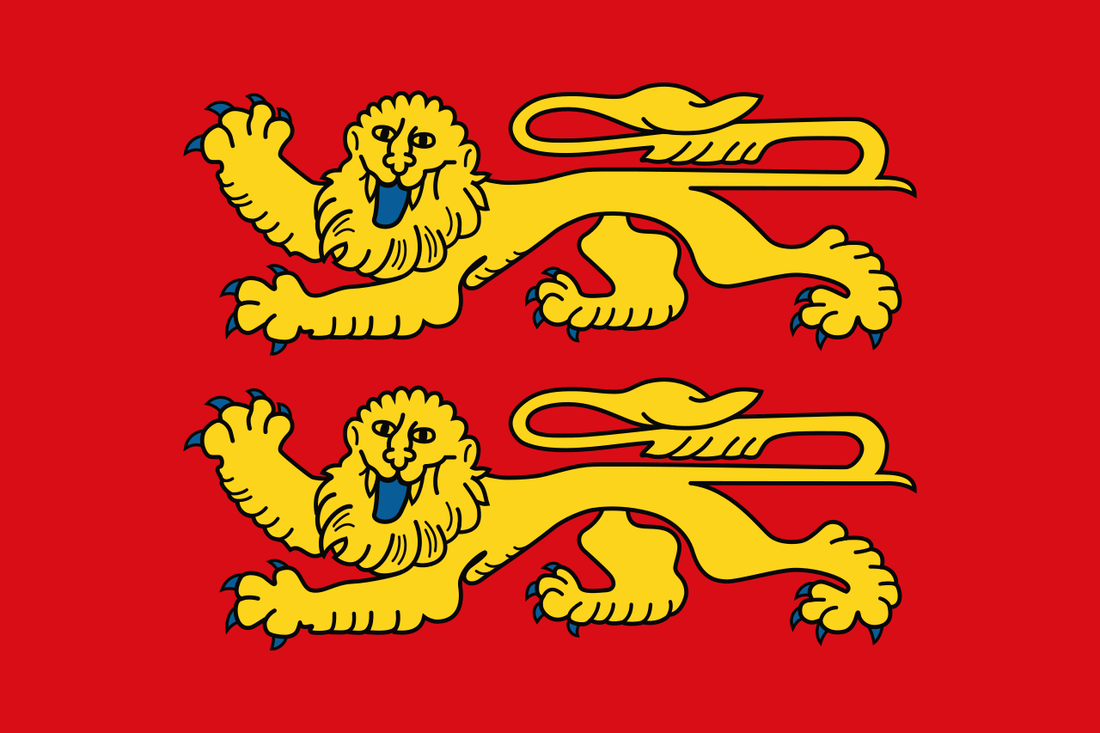
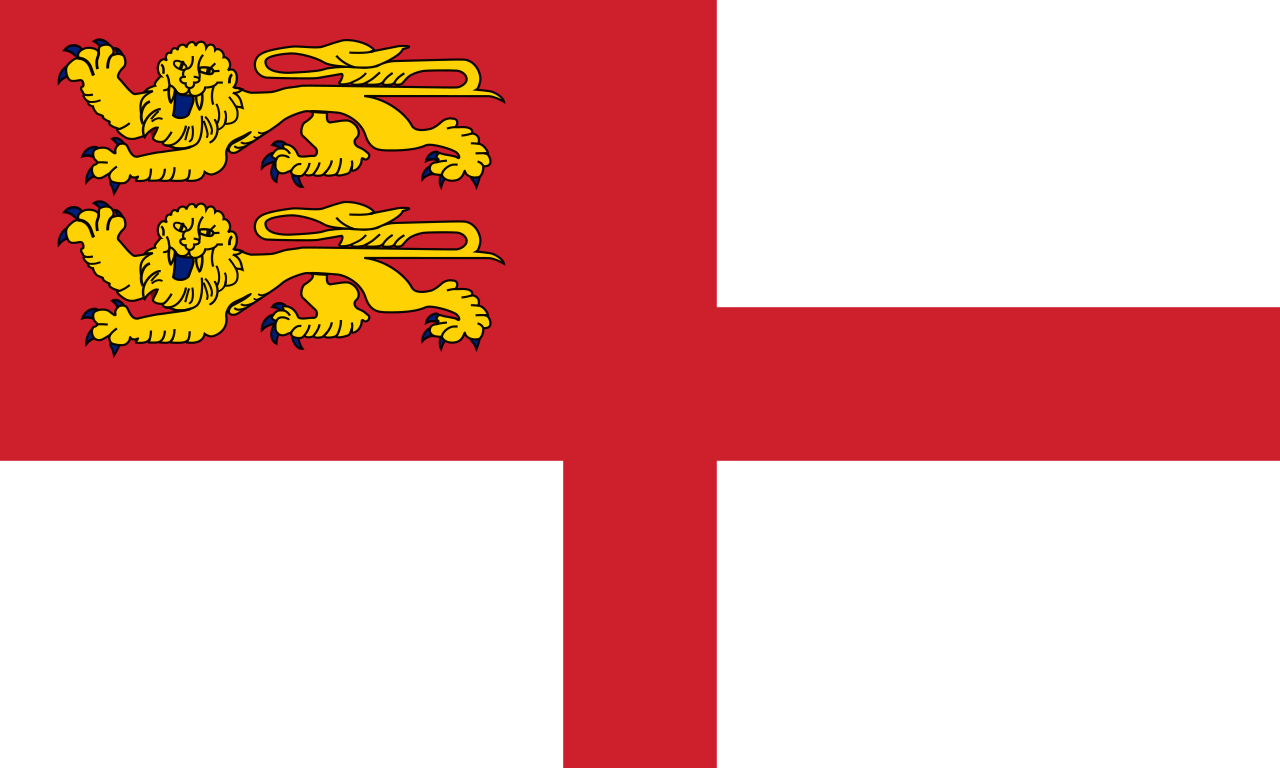
The Coat of Arms of Brunswick primarily bears the claim of rightful sovereignty over Aquitaine and Normandy. The two golden lions passant on the red background especially go back to this time of the (disputed) end of the first house of Anjou and takeover by the usurper house of the Capets of France.
In the norms of international law a rightful Monarch keeps alive his ancient sovereign jurisdiction as long as his heirs continue to bear the coat of arms of that jurisdiction. If members of the family fail to do that for a period of 100 years then the jurisdiction is normally surrendered by laws of prescription. Here are some examples of keeping it alive by bearing the arms continuously:
. . . Arms of Pretension are those borne by [genuine] sovereigns who have no actual authority over the states to which such arms belong, but who . . . express their prescriptive right thereunto. (Henry Gough, A Glossary of Terms used in Heraldry, 1894, p. 18)
. . . Arms of pretension [are] where a sovereign claims de jure [legally and rightfully] a possession which he no longer holds, and sometimes never held, de facto. Thus the kings of England from Edward III to George III bore the French lilies, and claimed to be kings of France, and the kings of Sardinia and Naples used the arms of Cyprus and Jerusalem. In fact, nearly all the older sovereigns of Europe used arms of this character. The armorial shield of the house of Austria at the dissolution of the empire affords a number of curious examples of arms of pretension. Besides Hungary, Bohemia, Da matia, and Slavonic, it contained Aragon and Sicily, Brabant, Swabia, Antwer , Flanders, Burgundy, Naples, Jerusalem, Lombardy, and Milan. (The Encyclopaedia Brittanica: A Dictionary of Arts, Sciences and General Literature, vol. 11, "Heraldry," 1880, p. 614)
Brunswick is a rival Capetian house, as heirs of the same Carolingian line, with inter-house agreements of co-recognitions all the way down the line till today. Often France did take sides of the senior House of Wolfenbuttel-Brunswick to help them go to war in greater regional conflicts (for example when Hanover illegally became an Electorate or also when made into a Kingdom) and all princes of Germany also joined Brunswick in Protest. However yet at many other times France and Brunswick had been the greatest mortal enemies (ie in the Napoleanic war).
As shown above, the mere demonstration of a coat of arms alone can hold the weight in international law enough to suffice the maintenance of this Angevin and Aquitaine inner-house struggle as a Capetian rival house. Otto IV of Brunswick held the main estates of the Angevin Empire, and had a pledge of King Richard to give the rest to the other sons of Henry the Lion who came to his aide, giving their lives to the Hohenstaufen Tyrant in exchange for his freedom. However these efforts came to no avail as war with the smaller areas of France were unwinding with King John winning a treaty with the rival Capetian line who are today’s Kings of France.
Henry II of England, one of the last major rulers of the Angevin Empire had nearly everything inherited by his daughter Matilda, just as he received all via his mother's line, who was Granddaughter of an Angevin King of Jerusalem(Henry II was son of Geoffrey Plantagenet, son of Fulk V, King of Jerusalem). Henry II was father-in-law of Henry the Lion of Brunswick, and had long battled to retain headship of the Angevin Empire as a rival branch of the House of Capet, and he was often in war against France, as allies with Imperial Germany.
At the time of these disputes for the original house of Angevin to continue there was no strong preference of Primogeniture law (ie among the Anglo-Norman Kings of England) at the time. The heirship was mainly by preference among nephews and often via lines of daughters. King Richard's chosen successors (house of Brunswick Dukes) were the only legal (de jure) true successors. De facto occupation did hold but not without continuous protest and claim by Brunswick.
It does stand in the prevailing Dynastic house and public laws today that all of these other branches are required to remain in subordinance to Europe’s oldest Royal House(Saxony Brunswick Imperial line) for the continuation of the House of the Angevin-Britain-Saxony-Jerusalem Empire). Brunswick maintains that the Capetian house is junior on several lines, including the Carolingian branches. So the highest claims to the crowns of Europe (and Jerusalem) are continued to this day.
Henry the Lion was very much active in Templar affairs, in the early states as his heirs were to become heads of the Angevin Empire (spanning England, France and Jerusalem). He founded numerous Templar Commanderies in Brunswick Germany. Henry the Lion's third son via Matilda of Anjou was Otto IV, and he became Holy Roman Emperor although designated to be Angevin Emperor by inheritance law, and by official decree of the lawful reigning Uncle King Richard.
As Henry the Lion's, sons Henry V and Otto IV had the most validly legal claim as the Angevin successor, it makes the house of Brunswick a worthy topic of interest for any who call themselves Templar. The Founder House of the Templar, and first two Grand Masters, supporter princes, and Kings of Jerusalem either of the Gothia Principality of France (which today is titled as Marqis under the Aquitaine Brunswick flag) or at least of the Angevin Royal House of Britain, Normandy/Aquitaine and especially the longest running line of Jerusalem Kings. Consequentially this line also bears a family tree back to Israel, Judah, and to the line of King David of Jerusalem.
The Queen of England today also carries the title of Jerusalem.
The whole world witnessed when on syndicated TV when the present Queen of England was coronated with the pronouncement by the Archbishop, declaring her to be "Queen of Israel".
For three centuries these titles of Jerusalem were proclaimed at England over the House of Brunswick during the reign of Hanover.
However, most do not know that in the House law of Este-Guelph Brunswick, Hanover is the Junior branch, and Brunswick-Wolfenbuettel is senior. It doesn't matter that Hanover was made an electorate within the Empire as our house has always been arch-rivals of the Habsburgs for the Imperial crown. Still all parties of the house recognize that Wolfenbuettel is senior. Still the original compacts and laws hold precedence at the founding of the house. For 300 years this Junior line of Brunswick, known as the Hannoverian Kings of England, had this title "King of Israel" pronounced over them by the Archbishops.
Still within the house law the senior branch Brunswick-Wolfenbuettel-Oels must be restored. This title "King of Jerusalem" has not only been part of the Angevin house of Brunswick since ancient times, it has remained operating to this present day.
During the French wars against the Royalist Templars Napoleon killed half a dozen Dukes of Brunswick, including the Grand Master of the French Templars, Louis Hercule Timoléon de Cossé-Brissac. He had become Grand Master in 1776, and was killed during the French Revolution in the cause of the Royalty.
In the aftermath of these wars, Hanover was bribed to press fraudulent claims over the senior House Brunswick younger surviving Heirs. Most of the allies of the senior line of Brunswick did not buy these claims of Hanover that they could cause Brunswick to be disinherited by the senior branch. The German federal government did not agree with seizure of Brunswick lands, and stipulated that although the lands are stolen, the heirs of the senior line should inherit (copies are in our possession). The Swiss and French courts still did maintain inheritance as belonging to the senior line Brunswick Heirs. Demands from the Emperor of Austria to restore the senior branch, and not to have Hanover invading or intermeddling with their neighbor senior branch. (These are also in our posession.) The Emperor of Austria cataloged several matters of established international law in regards to the succession of the state and intermeddling of Hanover. They conclusively proved the matters of dethroning the younger children of the last duke were in violation of the law by interfering with the continued inheritance to the senior line of Brunswick-Wolfenbuettel.
This has been republished in France, in books that demonstrate this all was illegal. Since the Brunswick youngsters were unlawfully and forcibly removed, history has been systematically attempted to be re-written as it concerns the Kingdom of Jerusalem and the Templars.
According to House law, with the failure of all these to act according to the law, there must arise a cadet branch to restore it. Prince Charles II's firstborn son Charles who immigrated to the United States is the correct progeny, not of a cadet branch, but is correctly called a senior Branch. All parties except for Hanover had initially accepted that the agnates of Chalres II would succeed to the throne, whether or not he was exiled in Geneva. This all being realized in the House of Nott-Brunswick(d'Este-Guelph), read about the
"Oels Commandery Knights and Elector Abp. Stephen, Grand Commander for BENELUX"
Protest was delivered to Heinrich von Hanover in 2009 before commencement of the 200th year anniversary of the Brunswick Ducal Guard ceremonies. All of the parties had met at the anniversary celebration of the Black Legion at Brunswick-Wolfenbuettel as representing the mourners who raise continual petition against the suppressed Principality of Brunswick-Wolfenbuettel-Oels.Nevertheless, at Jerusalem there has remained a plea by the Clergy to restore the Crusader Kingdom of Jerusalem. There have consistently been Roman, Egyptian Coptic, Byzantine, Greek, Anglican and other church Bishops and Archbishops stationed at Jerusalem for the restoration of the prophesied Kingdom. This is additional proof of the continual protest and maintenance of the Christian Kingdom of Israel as maintained in the majority by those who are successors of the founders of our religion. The Bishops and other high Clerics all have had autonomous princely authority like the Pope of Rome.
Non-Roman Bishops (and many independent Abbots, ie Glastonbury) worldwide have had equal sovereignty as the Pope of Rome. It wasn't only the Eastern Church who has popes that are paid equal respects. The Western church (ie Columbanus the Culdee) has always had ours, though more suppressed. Rome kept some preeminence claimed in the West. However, it wasn't with such power really until Mussolini granted the Papacy with a bit more sovereignty. That is the current sovereignty they actually enjoy today as a state. However, before then, sovereignty of ecclesiastical institutions were still respected, and will continue to be in future times. Numerous charters of the Pope and numerous Monarchs confirmed such sovereignties are belonging to the Abbots and Clerics of Glastonbury.
The Jerusalem jurisdictions are distinct entities and lands that belonged to our forefathers. This struggle is central and continuous to every shade of Templar order and a great many orders of Knighthood.
Many people skip over some of the greatest authorities on history from the 19th Century, to monopolize and convolute it to say the Templars were disbanded at many times. Most of these false histories were written in the 20th and 21st Centuries. Yet numerous historians beforehand have maintained "The chain of transmission is perfect in all its links."(Mills)
Templars have consistently retained an autonomous nature, and have been preserved not only in Masonic lines in more than a dozen nations (under Thousands of law officials up to and including the Monarchs of the nations), but has been especially retained by Royalists in non-Masonic German, Non-Masonic Scottish, and Non-Masonic French courts.
In "Mill's History of Chivalry" (19th Century Historian) it says that "the order of Templars have never been dissolved, but only suppressed". He lists the successful transmission to de Molay's successor which he performed as soon as he suspected he would be a martyr. Several other authorities on chivalry, like Mills, at the time wrote much more on the perfect transmission of Templars to these days. These included Sutherland, de Magny, Dumas, Burnes, and Gregiore.
All true French Templars rely on, the "Charter of Transmission". (This is before Templars became quasi-Masonic, but were still strictly Royalist). This charter was also confirmed by Prince Augustus Frederick who was the Grand Prior of England. The charter documented the unbroken line of French Templars successors until the French Revolution. In England, this sanctioned and approved reproduction of the Charter of Transmission required prior approval of the legal department of the British Crown, and these thereby constituted as “royal proclamations” when published. (See attached opening leaf below). It included the Royal Arms of England:

The Charter of Transmission was republished under this title "Sketch of the History of the Knights Templars" with approval of the crown in 1840. Within the book it included several other charters such as from King James the IV of Scotland re-confirming the inheritance of the Templars in the sixteenth century. This publication constituted force of law on behalf of the Templars. This is upheld in the British Crown Office Act of 1877, Section 3.3. Since prior approval was made, it thus created a binding legal fact of public law, by force of law.
Queen Victoria's son, King Edward VII also reconfirmed these (and many other charters) when he was Grand Master of the English Templars.
In Scotland, as in Brunswick, there was no enforcement of the demands to transfer the Templar estates to the Hospitallers. Normally new properties are immediately incorporated into an existing inventory. This happened all over Germany and England but it
did not happen with the Templar estates in Brunswick, nor in Scotland. In Scotland King James IV acknowledged this.
He confirmed all former grants of land made to "Sancto Hospitali de Jerusalem, et fratribus ejusdem militia Templi Salomis".
This reference to the Templars is said to prove that the Templar Order maintaned an existence that was united with the Hopsitallers.
Even to this day all Brunswick Houses on the Hospitallers maps of estates still list these as Templar properties. Only the pope said they should take those away from the Templar. However it is well documented that they couldn't comply. Even the Grand Commander of Saxony's Knights Hospitaller conceded Brunswick retained their same preceptories at the same locations as Templar preceptories. Also these expanded to the Ducal Knights Halls, under the most strongest impenatrable protections.
Brunswick ignored Pope Clement's order to dissolve the Templar, and Prince Otto of Brunswick did not step down as Templar commander. The resistance was recorded to include pitched battles. As he was prince they could not take him down. However as part of a strategy to bankrupt these invaders he did take an additional title as Hospitaller commander, and within a few years he forced them to sell it back to the Templar representatives. As early as 1367 the land records show the Hospitallers (via their Saxony Commander) had to sell the Templar Preceptories back to "Tempelherren / Templar". Deeds of 1408 and 1409 again confirm the Templar sites to be in possession of Tempelherren and not Hospitallers.
As Otto was already titled the dux (Legion Commander) of Supplingenburg and brother of the Duke (Monarch) of Brunswick at a time it was a powerful Imperial house over all Germany and surrounding lands. As far as keeping the key Templar Commanderies in Templar hands, this was clearly a grand joint effort that was successful. At any time in Brunswick there was no full takeover of Hospitallers. As some times they were only a co-serving name of the Templar Commanderies, while the previous continued not only at the original sites but in additional Ducal Knights halls. Most of that wasn't published so widely about how the dukes continued to lead the Templar, however it came out more during the Reformation period, as true Catholic Orthodoxy was promoted to be in conflict with Rome. Even for the short period that the Hospitallers had some sort of position leasing those Templar estates (owned by the Duchy of Brunswick) they were merely tenants who had to pay the Brunswick Monarchy (Templar Grand Commanders) in order to lease the Templar sites for usage by the Hospitallers.
The Chiefs of the House of Brunswick gave no quarter to the Hospitallers. They later through such holdings emerged as Templar Grand Masters who held the authority over all German Freemasonry, as acknowledged. The Chief Duke of Brunswick (Grand Master of the Templar, and all German Freemasonry) officially declared war against Freemasonry in the late 1700s.
This was around the time of the war with Napoleon (Paris Illuminati headquarters), and Brunswick had high hopes of re-taking the rightful their rightful estates of France (as demonstrated in the family coat of arms, the arms of Aquitaine are the continual claim, Brunswick is the founding house of the Templar, with highest rights to the Avignon Empire, and the Divine right via the Carolingian senior branch among other high Royal branches).
So while there was much struggle against the Roman Catholics and the Illuminati since the time of the reformation, some believe the fons honorums and Templar orders didn't survive. However there were plenty of pre- and post-reformation, as well as pre- and post-schism Orthodox ecclesiastical, secular, royal, masonic and other clearly defined Templar institutions that carried on the Templar fons honorum in it's full weight by the original Templar Royal House. The fons honorums of the Templar have remained entirely intact within the House of Brunswick Angevin Royal heirs of the Crusader Kings of Jerusalem and the Royal House of the original Grand Masters.
In numerous examples the Dukes of Brunswick reconfirmed the authority and titles of the Kingdom of Jerusalem in maintaining these Templar houses in Brunswick. They continued as Protectors, Grand Masters, and Grand Priors over the Templars. This only became covered up during the French revolution and culmination of the Napoleanic wars killing the vast majority of the Jerusalem Templar Nobility and Royalists.
The following commanderies under the Hospitallers Bailwick of Brandenburg show their present commanderies in Braunschweig, Supplingenburg, Tempelhof, and Tempelburg all listed as Templars (or formerly Templars in the most recent records). This is not done for any other European Hospitaller Commanderies. The rest are just listed as Hospitaller commanderies.
In the below quote from the Chivralic Nobility expert, Mills, he confirmed that there has been a succession of Knight Templars from the twelveth century down to these days:
"The chain of transmission is perfect in all its links. Jacques de Molay, Grandmaster at the time of the persecution, anticipating his own martyrdom appointed as his successor in power and dignity, Johannes Marcus Larmenius of Jerusalem, and from that time to the present there hsa been a regular and uninterrupted line of Grand Masters.
The charter, (high quality scan is available), by which the supreme authority has been transmitted, is judicial and conclusive evidence of the Order's continued existence. This Charter of transmission, the the signatures of the various chiefs of the Temple, is preserved at Paris, with the ancient statutes of the Order, the rituals, the records, the seals, the standards and other memorial of the early Templars.
" The brotherhood has been headed by the bravest cavaliers in France ; by men who, jealous of the dignities of knighthood, would admit no cor ruption, no base copies of the orders of chivalry, and who thought that the shield of their nobility was enriched by the impress of the Templars' red cross. Bertrand du Guesclin" was the Grand Master from 1357 till his death in 1380, and he was the only French commander who pre vailed over the chivalry of our Edward III. From 1478 to 1497, we may mark Rohert Lenoncourt, a cavalier of one of the most ancient and valiant families of Lorraine. Phillippe Chabot, a renowned captain in the reign of Francis I, wielded the staff of power from 1516 to 1543. The illustrious family of Montmorency appear as Knight Templars, and Henry, the first duke, was the chief of the Order from the year 1574 to 1614. At the close of the seventeenth century, the Grand Master was James Henry de Duras, a marshal of France, the nephew of Tur- enne, and one of the most skilful soldiers of Louis XIV. The Grand Masters from 1724 to 1776 were three princes of the royal Bourbon family. The names and years of power of these royal personagos who acknowledged the dignity of the Order of the Temple, were Louis Augustus Bourbon, Duke of Maine, 1724-1737 ; Louis Henry Bourbon Condi, 1737-1741 ; and Louis Francis Bourbon Conty, 1741-1746. The successor of these princes in the Grand Mastership of the Temple was Louis Hercules Timoleon, Duke de Cosse Brissac, the descendant of an ancient family, long celebrated in French history for its loyalty and gallant bearing. He accepted the office in 1776, and sustained it till he died in the cause of royalty at the beginning of the French Revolution. The order has now its Grand Master, Bernardus Raymundus Fabre Palaprat;1 and there are Colleges in England and in many of the chief cities in Europe."
Besides this general history by an authority on chivalry, the other points in this article have has been clearly recognized in international law in relation to many aspects of inheritance and transmission. While the Masonic side when not directly under a monarch has been still fraternally seeking the restoration of the Kingdom at Jerusalem. So on all counts, the points of sovereignty remain irrefutable in the striving for the restoration of Kingdom at Jerusalem.
Every Christian who professes any of the basic tenants of our faith maintain this struggle.
After Christ resurrected from the dead, this was the most important topic of the Christians:
Act 1:6 KJV - 6 "When they therefore were come together, they asked of him, saying, Lord, wilt thou at this time restore again the kingdom to Israel?"
We all pray His prayer "Thy Kingdom COME and will be done on earth.."
We are told for the necessities of life, we must "seek first the Kingdom of God(like Davidic prophetic Kingdom), then all these things will be added unto you."
These things are believed in every branch of Christianity. Militant Christians who believe, all look toward this coming Kingdom of which all the nations and all twelve tribes (not just the one tribe of Judah) will be dominating. These are all built on the sovereignty of Jerusalem and Templars that are without question operating. Only recently these questions and re-writing of history has come in.
It is not only belief, but a consistant striving among all including those who havent been under the Jerusalem monarchs for a few centuries(near 100 American Templar groups). There is a common oath to strive toward the east. It's not only beliefs of all Christians, faith without works is dead. Proof we believe is shown in actions as all Christians should become Templars, and become a part of reestablishment in the East (at Jerusalem). The actions are also abundant that back up the complete belief in the whole book, which culminates in this Jerusalem Kingdom. Faith without works is dead, and whatsoever is not of faith is sin. Romans 10:17 says "Faith comes by hearing the spoken word", so gather around and support those who speak the word to help convert the lost and bring them into His fold.
The numerous Kings and Queens of Sovereign Nations being Grand Masters of the regional and National Grand Commanderies testify exhaustively to these facts of continued sovereignty of Jerusalem and the striving of all Christian Israelites to restore it.
Within any of the above forms have been a great qualification of the transmission of sovereignty of the Kingdom of Jerusalem.
Yet still many are uneducated. "My people are destroyed for a lack of knowledge". We must educate them about the law and their heritage.
We have copies of the most well known lawmen of Britain, France, Scotland and Germany as fighting for this Kingdom of Jerusalem through the order of Templars (of the last two centuries) which claim to protect it.
In Britain alone we have a list of more than 1,000 very high ranking people in British society from the 14th to 19th Centuries who openly identified themselves as "Templars". These being in all levels of distinction in the records of the Law — Judges, Advocates, Jurists and the like; and the majority. click here to read the catalog of notable British Templars (post 14th century) in full.
In Brunswick and throughout Prussia (Germany) there were far, far more experts of the law protecting the Knights Templar from the 14th to 19th centuries. The periods where this all was understood more clearly, and the periods where the Christian nations thrived and were prosperous. (Contact us for an extensive list of these high ranking people in German government who were openly and boldly Templars.)
Together with the Metropolitanate of Gothia (Crimea) HMSH Duke Stephen d'Guelph Brunswick has secured cooperation agreements with their successors. This amounts to ecclesiastical and princely recognition of commanderies within Gothian Electorate entities, enough to be valid as confirmed by multiple de jure heads of Princely Jurisdictions(x6) and Ecclesiastical ranks of Primates(x4) as parties of state rights in international law. When the order was first formed
A Constitution was agreed among all. In celebration of this revival, at Mass on February 7th, 2015, in the Archdiocese of Berlin Germany, the American Orthodox Catholic Church co-consecrated HMSH Stephen, and anointed Him as Imperial Elector of the Goths and declared Him successor of the House of Wolfenbuttel-Brunswick. These acts co-recognized agreements with the current Ecclesiastical and Princely House of Gothia(Crimea and Sweden) executed in the person of His Excellency Prince Archbishop Ambrose von Sievers.
The order of Gothian Templar was then founded: militie Templi, iurisdictiones Gothorum Imperii
As Primate +Ambrose is head of His royal and ecclesiastical state of Gothia at Crimea, which holds recognitions by several powers including the EU, He enjoys several minority rights protection as persecuted exiles of Russia in the EU.
As Primate +Stephen is head of His royal and ecclesiastical states, the church of the Culdees was also registered at Glastonbury as a protected religious minority.
While our ancient rites are protected within the church of the East and West (as was in the original founding of the Templar) it remains of highest necessity that the Grand Master of the re-founding of the Templar order is not only of the original lines of the founding Knights and Kings of Jerusalem, but also ensures to re-established as a true Regent should, to gain Sovereign protects of a reigning Monarch, as is obligatory with a genuine fons honorum.
Therefore the Divine Rights are by God's Grace executed under our Captains who are allegiance under Christ our King of Kings, Jesus*Yahshua* the Christ. So the Templar Knights are validly a party of international law as it concerns the head of the house of Brunswick-Wolfenbuettel-Oels, who is chief of the House of d'Este-Guelph.
Subscribe to:
Posts (Atom)