The article gets into succession of the houses of the Visigothic Nobility(Toulouse Gothia), the Ostrogothic Nobility (Amelung/Billung) of the Dukes of Saxony, the early Emperors. Furthermore, the "Principality of Gottingen" is the alloidial capital of the House of Brunswick. As alloid capital, the rightful duke of Wolfenbuttel-Brunswick, Charles II made a pact with Napoleon III to seize this land from Hanover. The French did not follow through on their pledge (yet) but it remains a title of the house of Wolfenbuttel "Prince of Gottingen" as a central, formerly a capital alloid.
Although Henry the Lion did not become the chief Monarch of the Angevin Empire, his son Otto IV arguably did.
To trace the line of successors we turn back to their Great Grandmother, Princess Maud of Scotland, the daughter of King Malcom III, the Queen of England and Duchess of Normandy at the same time. Her heirs included the Chiefs of the House of Anjou, whose Empire included the Kingdom of Jerusalem. Eleven successive Kings of Jerusalem were direct house members of the Anjou (Angevin) Dynasty of France.
Otto IV's Uncle King Richard held hostage
The Angevin King (Emperor) Richard was kept hostage by the Austrian Duke Leopold until a special prisoner exchange was deal was met. This was presided over by the German Holy Roman Emperor Henry VI Hohenstaufen(of a rival Billunger line, usurper branch of Brunswick's then active rightful pre-Charlemagne alloids of Bavaria and Altorf). King Richard was exchanged for the two Dukes of Brunswick(Otto IV and Henry V) and the Bishopric of Wells which would annex Glastonbury Abbey. This tyrannical Emperor of Germany Henry VI had died in 1197 and so Richard (who was heir of the Electorate of Arles) placed his vote for these Guelph princes to become the next Emperor. After many attempts by Otto IV’s uncle (King Richard) to secure a marriage with the Scottish Royal House (to become King of Scotland) he had re-arranged his commitments to Brunswick by making all to fall back to Otto IV as the Angevin heir, by making him the Duke of Angevin Aquitaine and the Count of Poitou in 1196.
Illegal Usurpation of Angevin by King John
At the death of King Richard in 1197 a false Regency of Angevin was presided over by King John who was at war with France. In 1198 two of the Heirs and owners of the Angevin estates (Henry V Count Palatinate on the Rhine, Duke of Brunswick, and Henry of Winchester Duke of Brunswick) came to England to dispute King John for their rightful place in the Angevin Empire. However, this came to no avail. A peace treaty with France recognized King John as the heir of the Angevin Empire estates (although disputed by the House of Brunswick even till the last Capetian King was killed in the French Revolution, in the Brunswick Manifesto who claimed to raze Paris to the ground, lining up all civilians for a military execution if they continued to dishonor their rightful King/ally/ Rival Capetian house, who had made the Duke of Brunswick the rightful commander in chief of all the French Military, which Napoleon had defeated). His Grandson Charles II of Brunswick had received multiple treaties from the French Imperial House in the 1840's, agreeing on the larger inheritance of Germany and France estates, and cooperation in war on reclaiming that of which they were deprived.
So the usurpation of the Angevin estates by King John was just a French false construction in 1200AD when a peace treaty was made with said King John. No doubt they did so to counter balance the power against the then elected Emperor Otto IV in 1198 and England against eachother. It seems France tactfully predicted King John could not hold together his estates, and we all witnessed this epic collapse of the Angevin Empire (from Jerusalem to England). Finally the "second House of Anjou(Capetians)" formed in 1246 to direct the supremacy over the rest of thes French estates. Then finally Jerusalem's next King was no longer Angevinian (after 11 successive Angevin Kings of Jerusalem).
The New or "second house" of Anjou formed in 1246, and this spelled much disaster for the region in France and for the Western Orthodox. Ultimately they had Angevin (new house of Angevin) popes who turned on the Templar together with the French House Capetians.
However the original true House of Brunswick, who are the correct line of Aquitaine, Gothia(Septimania/Langudoc) and Normandy(most of France), and the Carolingian line, were resistant against this cull of the Templars. Like Scotland, Brunswick kept a great hiding place, and later emerged as great protectors of Templar, as was Robert the Bruce.
However Brunswick has continued the protest down through the ages. The protests have included numerous wars on these grounds, as well as formal written petitions, sometimes annual petitions of Brunswick Monarchs in official proclamations in writing published in Gazettes for the general public, or else at least the heirs of said Monarchs continued the name and claim to these domains by demonstrating their coat of arms. These have been secured also in numerous international treaties that remain valid up till the last several years.
Coat of Arms of the Angevin Empire Chief Royal House (England, Normandy and Jerusalem)
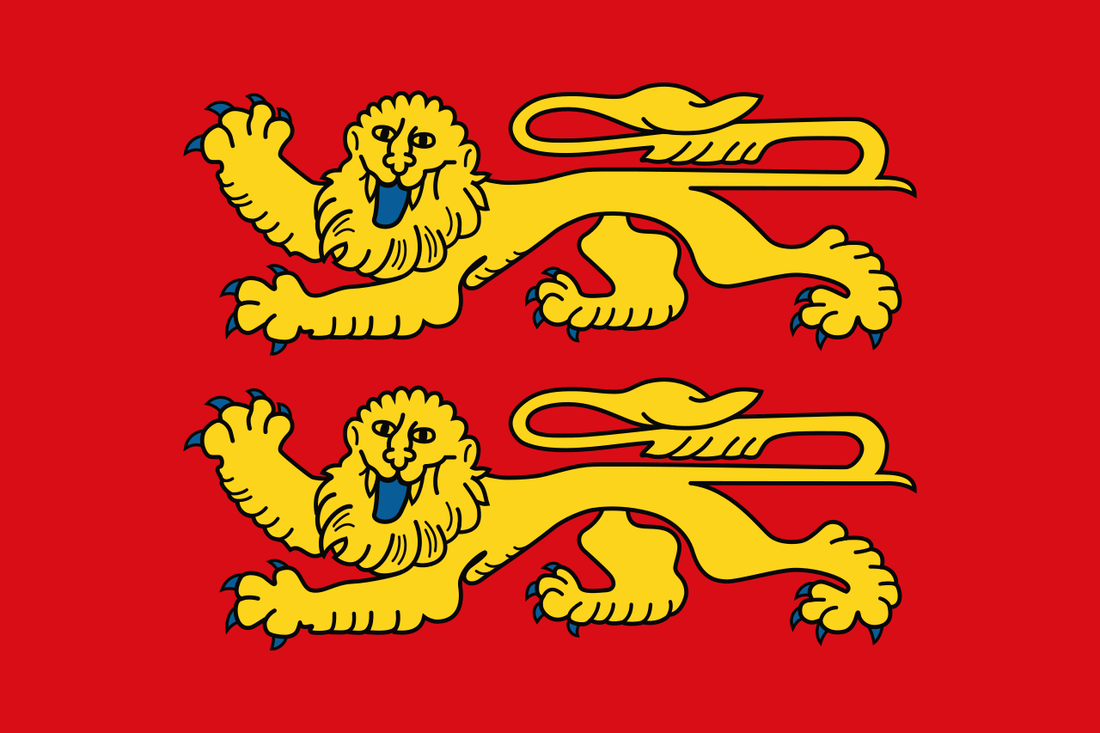
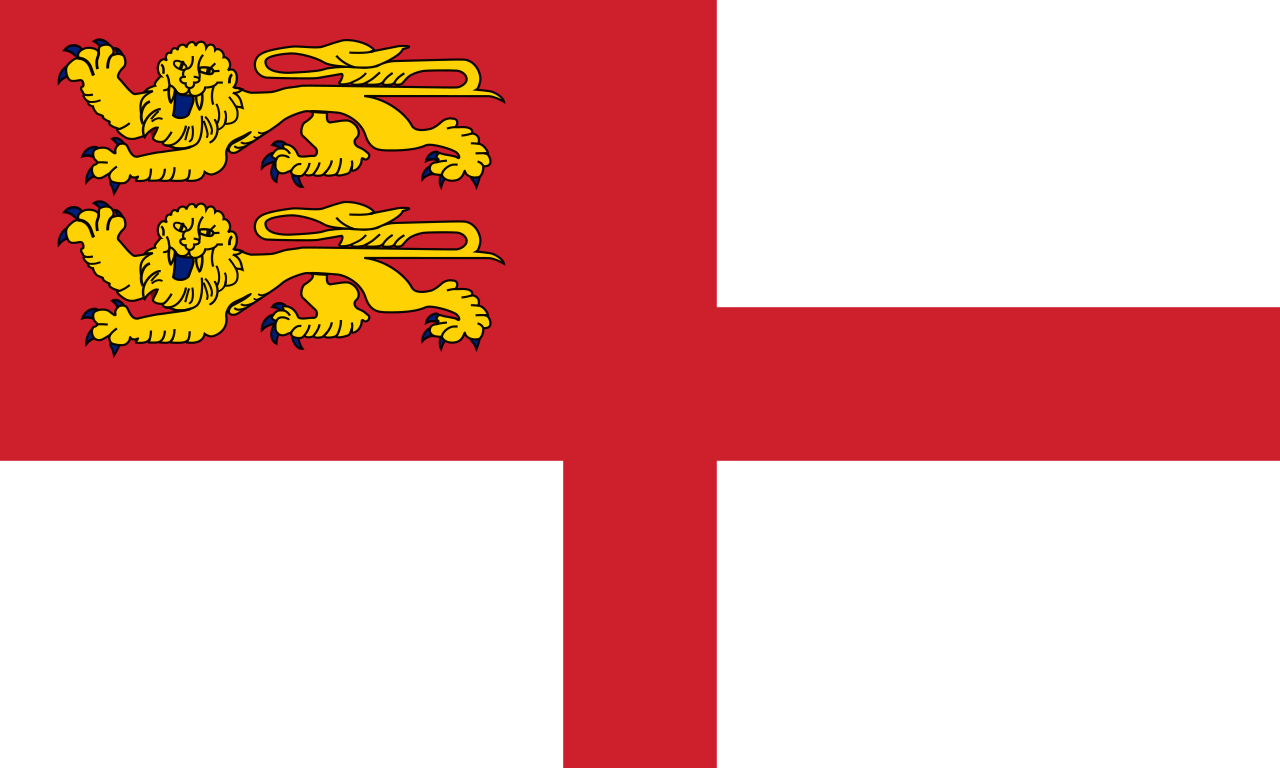
The Coat of Arms of Brunswick primarily bears the claim of rightful sovereignty over Aquitaine and Normandy. The two golden lions passant on the red background especially go back to this time of the (disputed) end of the first house of Anjou and takeover by the usurper house of the Capets of France.
In the norms of international law a rightful Monarch keeps alive his ancient sovereign jurisdiction as long as his heirs continue to bear the coat of arms of that jurisdiction. If members of the family fail to do that for a period of 100 years then the jurisdiction is normally surrendered by laws of prescription. Here are some examples of keeping it alive by bearing the arms continuously:
. . . Arms of Pretension are those borne by [genuine] sovereigns who have no actual authority over the states to which such arms belong, but who . . . express their prescriptive right thereunto. (Henry Gough, A Glossary of Terms used in Heraldry, 1894, p. 18)
. . . Arms of pretension [are] where a sovereign claims de jure [legally and rightfully] a possession which he no longer holds, and sometimes never held, de facto. Thus the kings of England from Edward III to George III bore the French lilies, and claimed to be kings of France, and the kings of Sardinia and Naples used the arms of Cyprus and Jerusalem. In fact, nearly all the older sovereigns of Europe used arms of this character. The armorial shield of the house of Austria at the dissolution of the empire affords a number of curious examples of arms of pretension. Besides Hungary, Bohemia, Da matia, and Slavonic, it contained Aragon and Sicily, Brabant, Swabia, Antwer , Flanders, Burgundy, Naples, Jerusalem, Lombardy, and Milan. (The Encyclopaedia Brittanica: A Dictionary of Arts, Sciences and General Literature, vol. 11, "Heraldry," 1880, p. 614)
Brunswick is a rival Capetian house, as heirs of the same Carolingian line, with inter-house agreements of co-recognitions all the way down the line till today. Often France did take sides of the senior House of Wolfenbuttel-Brunswick to help them go to war in greater regional conflicts (for example when Hanover illegally became an Electorate or also when made into a Kingdom) and all princes of Germany also joined Brunswick in Protest. However yet at many other times France and Brunswick had been the greatest mortal enemies (ie in the Napoleanic war).
As shown above, the mere demonstration of a coat of arms alone can hold the weight in international law enough to suffice the maintenance of this Angevin and Aquitaine inner-house struggle as a Capetian rival house. Otto IV of Brunswick held the main estates of the Angevin Empire, and had a pledge of King Richard to give the rest to the other sons of Henry the Lion who came to his aide, giving their lives to the Hohenstaufen Tyrant in exchange for his freedom. However these efforts came to no avail as war with the smaller areas of France were unwinding with King John winning a treaty with the rival Capetian line who are today’s Kings of France.
Henry II of England, one of the last major rulers of the Angevin Empire had nearly everything inherited by his daughter Matilda, just as he received all via his mother's line, who was Granddaughter of an Angevin King of Jerusalem(Henry II was son of Geoffrey Plantagenet, son of Fulk V, King of Jerusalem). Henry II was father-in-law of Henry the Lion of Brunswick, and had long battled to retain headship of the Angevin Empire as a rival branch of the House of Capet, and he was often in war against France, as allies with Imperial Germany.
At the time of these disputes for the original house of Angevin to continue there was no strong preference of Primogeniture law (ie among the Anglo-Norman Kings of England) at the time. The heirship was mainly by preference among nephews and often via lines of daughters. King Richard's chosen successors (house of Brunswick Dukes) were the only legal (de jure) true successors. De facto occupation did hold but not without continuous protest and claim by Brunswick.
It does stand in the prevailing Dynastic house and public laws today that all of these other branches are required to remain in subordinance to Europe’s oldest Royal House(Saxony Brunswick Imperial line) for the continuation of the House of the Angevin-Britain-Saxony-Jerusalem Empire). Brunswick maintains that the Capetian house is junior on several lines, including the Carolingian branches. So the highest claims to the crowns of Europe (and Jerusalem) are continued to this day.
We have additional co-agreements with the Ecclesiastical Orthodox Jurisdiction of Gothia mainly for the reason that these original Grand Masters were not only Dukes over the principality of Anjou on numerous lines, but also several direct successors of the Visigothic Nobility. A generation before the papal recognitions of the Templar, the most senior prince of Europe at the Crusades who had the title "Prince of Gothia". He is accredited with bringingd brought the most knights to Jerusalem, and oversaw the formation of the first Templar at Jerusalem click here.
Henry the Lion was very much active in Templar affairs, in the early states as his heirs were to become heads of the Angevin Empire (spanning England, France and Jerusalem). He founded numerous Templar Commanderies in Brunswick Germany. Henry the Lion's third son via Matilda of Anjou was Otto IV, and he became Holy Roman Emperor although designated to be Angevin Emperor by inheritance law, and by official decree of the lawful reigning Uncle King Richard.
As Henry the Lion's, sons Henry V and Otto IV had the most validly legal claim as the Angevin successor, it makes the house of Brunswick a worthy topic of interest for any who call themselves Templar. The Founder House of the Templar, and first two Grand Masters, supporter princes, and Kings of Jerusalem either of the Gothia Principality of France (which today is titled as Marqis under the Aquitaine Brunswick flag) or at least of the Angevin Royal House of Britain, Normandy/Aquitaine and especially the longest running line of Jerusalem Kings. Consequentially this line also bears a family tree back to Israel, Judah, and to the line of King David of Jerusalem.
The Queen of England today also carries the title of Jerusalem.
The whole world witnessed when on syndicated TV when the present Queen of England was coronated with the pronouncement by the Archbishop, declaring her to be "Queen of Israel".
For three centuries these titles of Jerusalem were proclaimed at England over the House of Brunswick during the reign of Hanover.
However, most do not know that in the House law of Este-Guelph Brunswick, Hanover is the Junior branch, and Brunswick-Wolfenbuettel is senior. It doesn't matter that Hanover was made an electorate within the Empire as our house has always been arch-rivals of the Habsburgs for the Imperial crown. Still all parties of the house recognize that Wolfenbuettel is senior. Still the original compacts and laws hold precedence at the founding of the house. For 300 years this Junior line of Brunswick, known as the Hannoverian Kings of England, had this title "King of Israel" pronounced over them by the Archbishops.
Still within the house law the senior branch Brunswick-Wolfenbuettel-Oels must be restored. This title "King of Jerusalem" has not only been part of the Angevin house of Brunswick since ancient times, it has remained operating to this present day.
During the French wars against the Royalist Templars Napoleon killed half a dozen Dukes of Brunswick, including the Grand Master of the French Templars, Louis Hercule Timoléon de Cossé-Brissac. He had become Grand Master in 1776, and was killed during the French Revolution in the cause of the Royalty.
In the aftermath of these wars, Hanover was bribed to press fraudulent claims over the senior House Brunswick younger surviving Heirs. Most of the allies of the senior line of Brunswick did not buy these claims of Hanover that they could cause Brunswick to be disinherited by the senior branch. The German federal government did not agree with seizure of Brunswick lands, and stipulated that although the lands are stolen, the heirs of the senior line should inherit (copies are in our possession). The Swiss and French courts still did maintain inheritance as belonging to the senior line Brunswick Heirs. Demands from the Emperor of Austria to restore the senior branch, and not to have Hanover invading or intermeddling with their neighbor senior branch. (These are also in our posession.) The Emperor of Austria cataloged several matters of established international law in regards to the succession of the state and intermeddling of Hanover. They conclusively proved the matters of dethroning the younger children of the last duke were in violation of the law by interfering with the continued inheritance to the senior line of Brunswick-Wolfenbuettel.
This has been republished in France, in books that demonstrate this all was illegal. Since the Brunswick youngsters were unlawfully and forcibly removed, history has been systematically attempted to be re-written as it concerns the Kingdom of Jerusalem and the Templars.
According to House law, with the failure of all these to act according to the law, there must arise a cadet branch to restore it. Prince Charles II's firstborn son Charles who immigrated to the United States is the correct progeny, not of a cadet branch, but is correctly called a senior Branch. All parties except for Hanover had initially accepted that the agnates of Chalres II would succeed to the throne, whether or not he was exiled in Geneva. This all being realized in the House of Nott-Brunswick(d'Este-Guelph), read about the
Protest was delivered to Heinrich von Hanover in 2009 before commencement of the 200th year anniversary of the Brunswick Ducal Guard ceremonies. All of the parties had met at the anniversary celebration of the Black Legion at Brunswick-Wolfenbuettel as representing the mourners who raise continual petition against the suppressed Principality of Brunswick-Wolfenbuettel-Oels.
Nevertheless, at Jerusalem there has remained a plea by the Clergy to restore the Crusader Kingdom of Jerusalem. There have consistently been Roman, Egyptian Coptic, Byzantine, Greek, Anglican and other church Bishops and Archbishops stationed at Jerusalem for the restoration of the prophesied Kingdom. This is additional proof of the continual protest and maintenance of the Christian Kingdom of Israel as maintained in the majority by those who are successors of the founders of our religion. The Bishops and other high Clerics all have had autonomous princely authority like the Pope of Rome.
Non-Roman Bishops (and many independent Abbots, ie Glastonbury) worldwide have had equal sovereignty as the Pope of Rome. It wasn't only the Eastern Church who has popes that are paid equal respects. The Western church (ie Columbanus the Culdee) has always had ours, though more suppressed. Rome kept some preeminence claimed in the West. However, it wasn't with such power really until Mussolini granted the Papacy with a bit more sovereignty. That is the current sovereignty they actually enjoy today as a state. However, before then, sovereignty of ecclesiastical institutions were still respected, and will continue to be in future times. Numerous charters of the Pope and numerous Monarchs confirmed such sovereignties are belonging to the Abbots and Clerics of Glastonbury.
The Jerusalem jurisdictions are distinct entities and lands that belonged to our forefathers. This struggle is central and continuous to every shade of Templar order and a great many orders of Knighthood.
Many people skip over some of the greatest authorities on history from the 19th Century, to monopolize and convolute it to say the Templars were disbanded at many times. Most of these false histories were written in the 20th and 21st Centuries. Yet numerous historians beforehand have maintained "The chain of transmission is perfect in all its links."(Mills)
Templars have consistently retained an autonomous nature, and have been preserved not only in Masonic lines in more than a dozen nations (under Thousands of law officials up to and including the Monarchs of the nations), but has been especially retained by Royalists in non-Masonic German, Non-Masonic Scottish, and Non-Masonic French courts.
In "Mill's History of Chivalry" (19th Century Historian) it says that "the order of Templars have never been dissolved, but only suppressed". He lists the successful transmission to de Molay's successor which he performed as soon as he suspected he would be a martyr. Several other authorities on chivalry, like Mills, at the time wrote much more on the perfect transmission of Templars to these days. These included Sutherland, de Magny, Dumas, Burnes, and Gregiore.
All true French Templars rely on, the "Charter of Transmission". (This is before Templars became quasi-Masonic, but were still strictly Royalist). This charter was also confirmed by Prince Augustus Frederick who was the Grand Prior of England. The charter documented the unbroken line of French Templars successors until the French Revolution. In England, this sanctioned and approved reproduction of the Charter of Transmission required prior approval of the legal department of the British Crown, and these thereby constituted as “royal proclamations” when published. (See attached opening leaf below). It included the Royal Arms of England:

The Charter of Transmission was republished under this title "Sketch of the History of the Knights Templars" with approval of the crown in 1840. Within the book it included several other charters such as from King James the IV of Scotland re-confirming the inheritance of the Templars in the sixteenth century. This publication constituted force of law on behalf of the Templars. This is upheld in the British Crown Office Act of 1877, Section 3.3. Since prior approval was made, it thus created a binding legal fact of public law, by force of law.
Queen Victoria's son, King Edward VII also reconfirmed these (and many other charters) when he was Grand Master of the English Templars.
In Scotland, as in Brunswick, there was no enforcement of the demands to transfer the Templar estates to the Hospitallers. Normally new properties are immediately incorporated into an existing inventory. This happened all over Germany and England but it
did not happen with the Templar estates in Brunswick, nor in Scotland. In Scotland King James IV acknowledged this.
He confirmed all former grants of land made to "Sancto Hospitali de Jerusalem, et fratribus ejusdem militia Templi Salomis".
This reference to the Templars is said to prove that the Templar Order maintaned an existence that was united with the Hopsitallers.
Even to this day all Brunswick Houses on the Hospitallers maps of estates still list these as Templar properties. Only the pope said they should take those away from the Templar. However it is well documented that they couldn't comply. Even the Grand Commander of Saxony's Knights Hospitaller conceded Brunswick retained their same preceptories at the same locations as Templar preceptories. Also these expanded to the Ducal Knights Halls, under the most strongest impenatrable protections.
Brunswick ignored Pope Clement's order to dissolve the Templar, and Prince Otto of Brunswick did not step down as Templar commander. The resistance was recorded to include pitched battles. As he was prince they could not take him down. However as part of a strategy to bankrupt these invaders he did take an additional title as Hospitaller commander, and within a few years he forced them to sell it back to the Templar representatives. As early as 1367 the land records show the Hospitallers (via their Saxony Commander) had to sell the Templar Preceptories back to "Tempelherren / Templar". Deeds of 1408 and 1409 again confirm the Templar sites to be in possession of Tempelherren and not Hospitallers.
As Otto was already titled the dux (Legion Commander) of Supplingenburg and brother of the Duke (Monarch) of Brunswick at a time it was a powerful Imperial house over all Germany and surrounding lands. As far as keeping the key Templar Commanderies in Templar hands, this was clearly a grand joint effort that was successful. At any time in Brunswick there was no full takeover of Hospitallers. As some times they were only a co-serving name of the Templar Commanderies, while the previous continued not only at the original sites but in additional Ducal Knights halls. Most of that wasn't published so widely about how the dukes continued to lead the Templar, however it came out more during the Reformation period, as true Catholic Orthodoxy was promoted to be in conflict with Rome. Even for the short period that the Hospitallers had some sort of position leasing those Templar estates (owned by the Duchy of Brunswick) they were merely tenants who had to pay the Brunswick Monarchy (Templar Grand Commanders) in order to lease the Templar sites for usage by the Hospitallers.
The Chiefs of the House of Brunswick gave no quarter to the Hospitallers. They later through such holdings emerged as Templar Grand Masters who held the authority over all German Freemasonry, as acknowledged. The Chief Duke of Brunswick (Grand Master of the Templar, and all German Freemasonry) officially declared war against Freemasonry in the late 1700s.
This was around the time of the war with Napoleon (Paris Illuminati headquarters), and Brunswick had high hopes of re-taking the rightful their rightful estates of France (as demonstrated in the family coat of arms, the arms of Aquitaine are the continual claim, Brunswick is the founding house of the Templar, with highest rights to the Avignon Empire, and the Divine right via the Carolingian senior branch among other high Royal branches).
So while there was much struggle against the Roman Catholics and the Illuminati since the time of the reformation, some believe the fons honorums and Templar orders didn't survive. However there were plenty of pre- and post-reformation, as well as pre- and post-schism Orthodox ecclesiastical, secular, royal, masonic and other clearly defined Templar institutions that carried on the Templar fons honorum in it's full weight by the original Templar Royal House. The fons honorums of the Templar have remained entirely intact within the House of Brunswick Angevin Royal heirs of the Crusader Kings of Jerusalem and the Royal House of the original Grand Masters.
In numerous examples the Dukes of Brunswick reconfirmed the authority and titles of the Kingdom of Jerusalem in maintaining these Templar houses in Brunswick. They continued as Protectors, Grand Masters, and Grand Priors over the Templars. This only became covered up during the French revolution and culmination of the Napoleanic wars killing the vast majority of the Jerusalem Templar Nobility and Royalists.
The following commanderies under the Hospitallers Bailwick of Brandenburg show their present commanderies in Braunschweig, Supplingenburg, Tempelhof, and Tempelburg all listed as Templars (or formerly Templars in the most recent records). This is not done for any other European Hospitaller Commanderies. The rest are just listed as Hospitaller commanderies.
In the below quote from the Chivralic Nobility expert, Mills, he confirmed that there has been a succession of Knight Templars from the twelveth century down to these days:
"The chain of transmission is perfect in all its links. Jacques de Molay, Grandmaster at the time of the persecution, anticipating his own martyrdom appointed as his successor in power and dignity, Johannes Marcus Larmenius of Jerusalem, and from that time to the present there hsa been a regular and uninterrupted line of Grand Masters.
The charter, (high quality scan is available), by which the supreme authority has been transmitted, is judicial and conclusive evidence of the Order's continued existence. This Charter of transmission, the the signatures of the various chiefs of the Temple, is preserved at Paris, with the ancient statutes of the Order, the rituals, the records, the seals, the standards and other memorial of the early Templars.
" The brotherhood has been headed by the bravest cavaliers in France ; by men who, jealous of the dignities of knighthood, would admit no cor ruption, no base copies of the orders of chivalry, and who thought that the shield of their nobility was enriched by the impress of the Templars' red cross. Bertrand du Guesclin" was the Grand Master from 1357 till his death in 1380, and he was the only French commander who pre vailed over the chivalry of our Edward III. From 1478 to 1497, we may mark Rohert Lenoncourt, a cavalier of one of the most ancient and valiant families of Lorraine. Phillippe Chabot, a renowned captain in the reign of Francis I, wielded the staff of power from 1516 to 1543. The illustrious family of Montmorency appear as Knight Templars, and Henry, the first duke, was the chief of the Order from the year 1574 to 1614. At the close of the seventeenth century, the Grand Master was James Henry de Duras, a marshal of France, the nephew of Tur- enne, and one of the most skilful soldiers of Louis XIV. The Grand Masters from 1724 to 1776 were three princes of the royal Bourbon family. The names and years of power of these royal personagos who acknowledged the dignity of the Order of the Temple, were Louis Augustus Bourbon, Duke of Maine, 1724-1737 ; Louis Henry Bourbon Condi, 1737-1741 ; and Louis Francis Bourbon Conty, 1741-1746. The successor of these princes in the Grand Mastership of the Temple was Louis Hercules Timoleon, Duke de Cosse Brissac, the descendant of an ancient family, long celebrated in French history for its loyalty and gallant bearing. He accepted the office in 1776, and sustained it till he died in the cause of royalty at the beginning of the French Revolution. The order has now its Grand Master, Bernardus Raymundus Fabre Palaprat;1 and there are Colleges in England and in many of the chief cities in Europe."
Besides this general history by an authority on chivalry, the other points in this article have has been clearly recognized in international law in relation to many aspects of inheritance and transmission. While the Masonic side when not directly under a monarch has been still fraternally seeking the restoration of the Kingdom at Jerusalem. So on all counts, the points of sovereignty remain irrefutable in the striving for the restoration of Kingdom at Jerusalem.
Every Christian who professes any of the basic tenants of our faith maintain this struggle.
After Christ resurrected from the dead, this was the most important topic of the Christians:
Act 1:6 KJV - 6 "When they therefore were come together, they asked of him, saying, Lord, wilt thou at this time restore again the kingdom to Israel?"
We all pray His prayer "Thy Kingdom COME and will be done on earth.."
We are told for the necessities of life, we must "seek first the Kingdom of God(like Davidic prophetic Kingdom), then all these things will be added unto you."
These things are believed in every branch of Christianity. Militant Christians who believe, all look toward this coming Kingdom of which all the nations and all twelve tribes (not just the one tribe of Judah) will be dominating. These are all built on the sovereignty of Jerusalem and Templars that are without question operating. Only recently these questions and re-writing of history has come in.
It is not only belief, but a consistant striving among all including those who havent been under the Jerusalem monarchs for a few centuries(near 100 American Templar groups). There is a common oath to strive toward the east. It's not only beliefs of all Christians, faith without works is dead. Proof we believe is shown in actions as all Christians should become Templars, and become a part of reestablishment in the East (at Jerusalem). The actions are also abundant that back up the complete belief in the whole book, which culminates in this Jerusalem Kingdom. Faith without works is dead, and whatsoever is not of faith is sin. Romans 10:17 says "Faith comes by hearing the spoken word", so gather around and support those who speak the word to help convert the lost and bring them into His fold.
The numerous Kings and Queens of Sovereign Nations being Grand Masters of the regional and National Grand Commanderies testify exhaustively to these facts of continued sovereignty of Jerusalem and the striving of all Christian Israelites to restore it.
Within any of the above forms have been a great qualification of the transmission of sovereignty of the Kingdom of Jerusalem.
Yet still many are uneducated. "My people are destroyed for a lack of knowledge". We must educate them about the law and their heritage.
We have copies of the most well known lawmen of Britain, France, Scotland and Germany as fighting for this Kingdom of Jerusalem through the order of Templars (of the last two centuries) which claim to protect it. In Britain alone we have a list of more than 1,000 very high ranking people in British society from the 14th to 19th Centuries who openly identified themselves as "Templars". These being in all levels of distinction in the records of the Law — Judges, Advocates, Jurists and the like; and the majority. click here to read the catalog of notable British Templars (post 14th century) in full.
In Brunswick and throughout Prussia (Germany) there were far, far more experts of the law protecting the Knights Templar from the 14th to 19th centuries. The periods where this all was understood more clearly, and the periods where the Christian nations thrived and were prosperous. (Contact us for an extensive list of these high ranking people in German government who were openly and boldly Templars.)
Together with the Metropolitanate of Gothia (Crimea) HMSH Duke Stephen d'Guelph Brunswick has secured cooperation agreements with their successors. This amounts to ecclesiastical and princely recognition of commanderies within Gothian Electorate entities, enough to be valid as confirmed by multiple de jure heads of Princely Jurisdictions(x6) and Ecclesiastical ranks of Primates(x4) as parties of state rights in international law. When the order was first formed